How to Read a Balance Sheet: A Shop Owner's Guide
A balance sheet looks like a wall of numbers, but it answers three simple questions: what the business owns, what it owes, and what belongs to the owner. Read with the profit and loss account, it tells you whether the business is growing safely.
The profit and loss account first
The P&L covers a period, usually a year from April to March.
- Sales minus the cost of goods sold (opening stock + purchases + direct expenses − closing stock) gives gross profit.
- Gross profit plus other income minus indirect expenses (rent, salaries, electricity, interest, depreciation) gives net profit.
Gross profit tells you if your pricing works. Net profit tells you if the whole business works.
The balance sheet
The balance sheet is a picture on one date, such as 31 March.
What the business owes and the owner's share (liabilities and capital):
- Capital: money the owner put in, plus profits kept, minus drawings.
- Loans: bank loans and other borrowings.
- Current liabilities: suppliers to pay, GST payable, expenses due.
What the business owns (assets):
- Fixed assets: furniture, machinery, computers, vehicles, after depreciation.
- Stock: goods on hand.
- Current assets: customers who owe you (debtors), deposits, advances.
- Cash and bank.
Both sides always total the same. If they do not, something was entered wrongly.
Five quick health checks
1. Gross margin (gross profit ÷ sales). Compare with last year. Falling margins mean rising costs or weak pricing.
2. Net margin (net profit ÷ sales). Many small traders run at 3 to 8 percent; service businesses higher.
3. Current ratio (current assets + stock + cash ÷ current liabilities). Above 1.2 means you can pay near-term bills.
4. Debtors vs sales. If debtors are a large share of a year's sales, customers are slow to pay and cash is stuck.
5. Drawings vs profit. If the owner takes out more than the business earns, capital shrinks year after year.
Where small businesses go wrong
- Not counting closing stock, so profit looks wrong.
- Mixing personal spending with business expenses.
- No depreciation, which overstates profit and the value of assets.
Make your own statements
If your year's balances are ready, our Profit & Loss and Balance Sheet Maker builds the trading account, P&L and balance sheet from a trial balance and shows whether everything balances. For statutory company accounts, work with your CA.
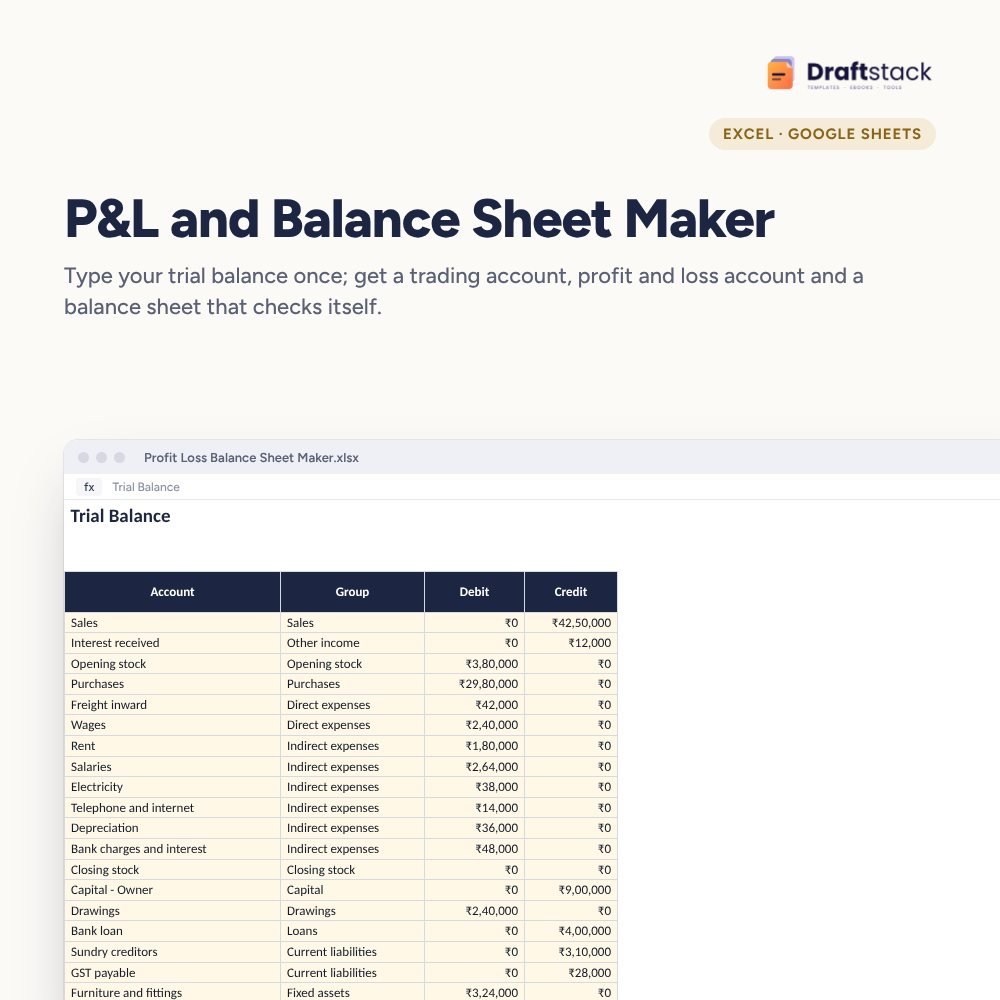 The template from this guideProfit & Loss and Balance Sheet Maker for Small Business (Excel)
₹187
 WhatsApp
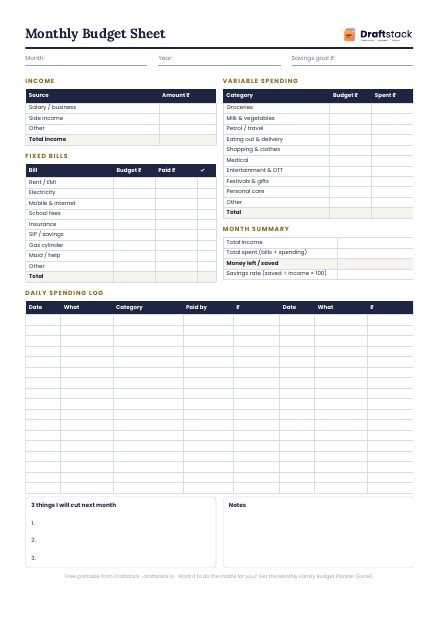
Free Monthly Budget Sheet
A printable one-page budget sheet: income, fixed bills, daily spending and savings for the month. Print it or fill it on your phone.
More guides
Cash Book vs Petty Cash: How Small Businesses Keep Them
What a cash book and a petty cash book are, how to write them every day, and the simple habits that stop cash going missing in a small business.
How to Make a Project Report for a Mudra or PMEGP Loan
What a bank wants in a project report for a Mudra or PMEGP loan, how to estimate project cost and sales, and how DSCR decides if the loan is approved.
Share Market Basics: Demat, NSE, BSE and Index Explained
A plain-language guide to how the Indian share market works: shares, exchanges, SEBI, Nifty and Sensex, demat accounts and how an order is placed.