Share Market Basics: Demat, NSE, BSE and Index Explained
The share market sounds complicated because of its words, not its ideas. Once you know a dozen terms, the news about the market starts to make sense. Here are the basics, for learning only.
What is a share?
A company divides its ownership into units called shares. Owning shares means owning a small part of the company. If the business does well, the share price may rise and the company may pay a dividend. If it does badly, the price can fall, and you can lose money.
Where are shares bought and sold?
India has two main stock exchanges: the National Stock Exchange (NSE) and BSE. A company first sells shares to the public in an IPO and then lists on an exchange, where investors buy and sell among themselves. The Securities and Exchange Board of India (SEBI) regulates the market and the brokers.
What are Nifty and Sensex?
An index is a basket of shares that shows how the market is doing overall. Nifty 50 follows 50 large companies on NSE. Sensex follows 30 large companies on BSE. When the news says "Sensex fell 500 points", it means the combined value of those 30 companies went down that day.
Demat and trading accounts
To invest you need a demat account, which holds your shares electronically, and a trading account, which places orders. A SEBI-registered broker opens both after KYC with your PAN, Aadhaar and bank details. The shares themselves are held with a depository, NSDL or CDSL.
Placing an order
In the broker's app you choose the company, quantity and order type:
- Market order buys at the current price.
- Limit order buys only at your price or lower.
- Delivery means you keep the shares; intraday means you buy and sell the same day, which is risky.
Most shares settle on T+1, meaning they reach your demat the next working day.
Shares or mutual funds?
Picking individual shares needs time to study companies. Many beginners start with mutual funds or index funds through a SIP, where a fixed amount is invested every month. Funds still carry market risk, but spread it across many companies.
Red flags
Guaranteed returns, "VIP tip" groups, requests for your OTP or login, and pressure to act fast are signs of a scam. Check registrations on the SEBI website and report fraud to 1930.
Learn before you invest
Spend a month learning and paper-trading before using real money. Our Stock Market Basics Course explains each of these topics in 14 lessons and includes a paper-trading journal. It is for education only and is not investment advice.
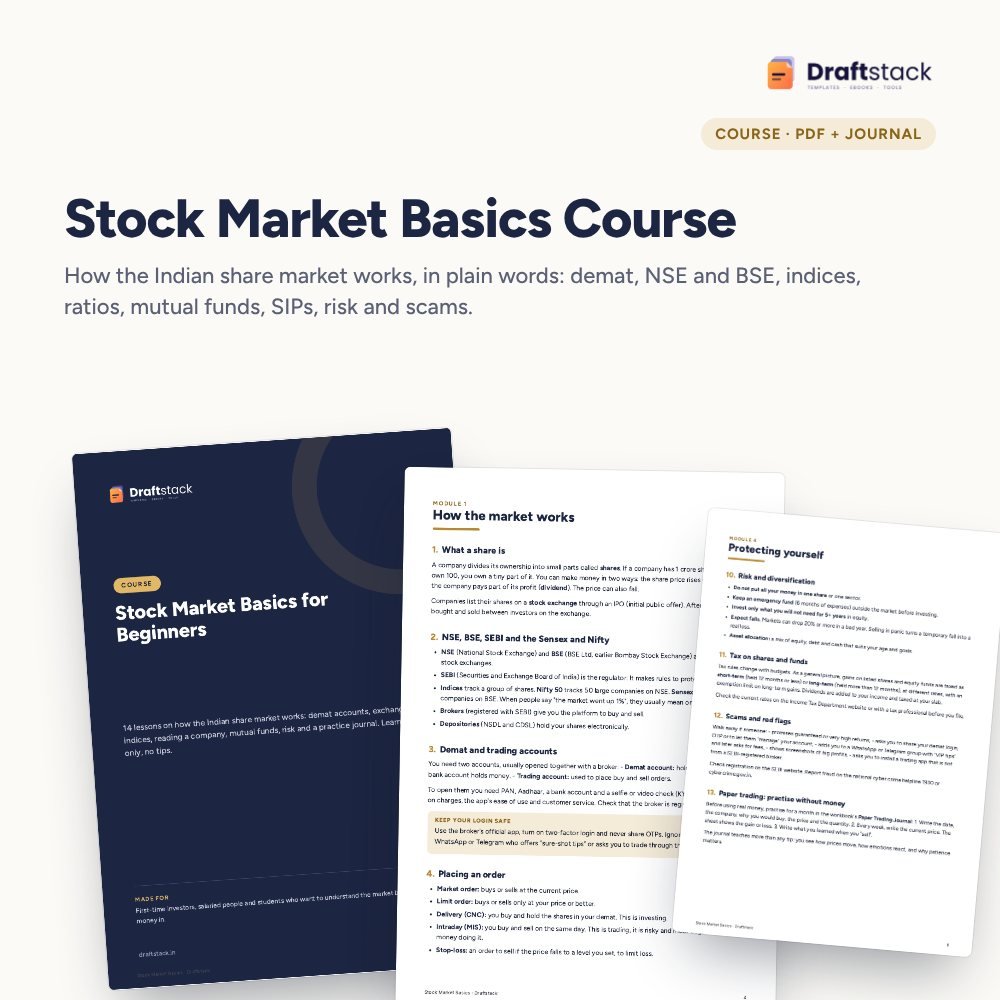 The template from this guideStock Market Basics Course for Beginners (Learning Only, No Tips)
₹299
 WhatsApp
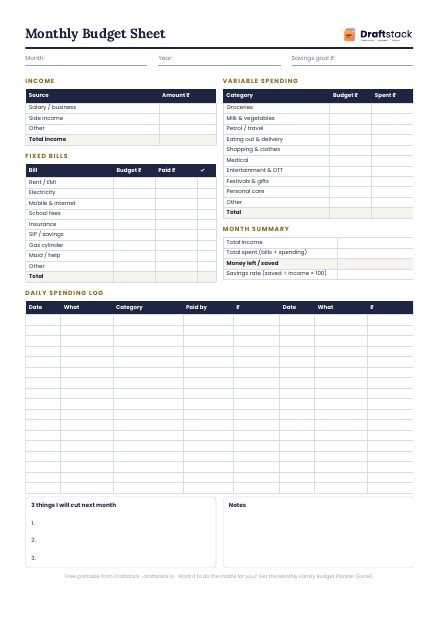
Free Monthly Budget Sheet
A printable one-page budget sheet: income, fixed bills, daily spending and savings for the month. Print it or fill it on your phone.
More guides
Get Your Shop on Google Maps: Google Business Profile Step by Step
How to add your shop or clinic to Google Maps with a Google Business Profile, get verified, add photos and reviews, and show up in near me searches.
How to Increase Typing Speed for SSC and Court Exams
A practical method to type faster and with fewer mistakes for government typing tests, with a daily routine, speed targets and how WPM is worked out.
NIELIT CCC Exam: Syllabus, Pattern and How to Prepare
What the CCC course covers, why government jobs ask for it, and a two-week plan to prepare with notes, practice questions and real computer practice.