Home Loan Tax Benefits: Interest, Principal and Joint Loans
A home loan can cut your income tax, but only if you use the right tax regime and claim it correctly. Under the new regime, which most salaried people now use, the benefit for a house you live in has gone. Under the old regime, it can still save you tens of thousands of rupees a year.
The section numbers changed under the Income-tax Act, 2025; the limits below did not. We use the old names (24(b), 80C) because everyone knows them.
Old regime: what you can claim
1. Interest on a self-occupied house: up to ₹2 lakh a year
The interest part of your EMIs is deductible up to ₹2,00,000 a year for a house you or your family live in. You can treat up to two houses as self-occupied, but the ₹2 lakh limit is for both together.
Conditions:
- The loan is for buying or building the house.
- The construction is completed within five years from the end of the year the loan was taken. If it takes longer, the limit drops to ₹30,000.
2. Principal repayment: within the ₹1.5 lakh limit
The principal part of your EMIs counts under the ₹1.5 lakh investment deduction (old 80C), along with EPF, PPF, insurance and others. Stamp duty and registration charges also count, in the year you pay them.
If you sell the house within five years of buying, the principal deductions you claimed are added back to your income in the year of sale.
3. Interest during construction
Interest paid before you get possession is not lost. Add it up and claim it in five equal parts, starting the year construction is completed, within the same ₹2 lakh yearly limit for a self-occupied house.
A let-out (rented) house
- Old regime: the full interest is deductible against rent. If this creates a loss, you can set off up to ₹2 lakh of it against salary; the rest is carried forward for eight years.
- New regime: interest is deductible against the rent from that house, but a loss cannot be set off against salary or carried forward.
New regime: what is left
For a house you live in: nothing. No interest deduction, no principal deduction. That is why people with large home loans sometimes do better in the old regime. Check with real numbers using our old vs new regime guide and the free tax regime calculator.
Joint home loans: double the benefit
If the house is owned jointly and both are co-borrowers paying the EMI:
- Each co-owner can claim interest up to ₹2 lakh and principal within their own ₹1.5 lakh limit (in the old regime).
- Each claims in the proportion of their ownership and payment.
A couple with a ₹60 lakh loan paying about ₹4 lakh a year in interest can together claim the full ₹4 lakh, instead of ₹2 lakh for one person. Both must be co-owners on the sale deed, not only co-borrowers.
Example: a ₹50 lakh loan at 8.5% for 20 years
- EMI: about ₹43,400 a month
- First-year interest: about ₹4.2 lakh; principal: about ₹1 lakh
- Old regime claim for one owner: interest ₹2 lakh + principal ₹1 lakh (if the ₹1.5 lakh limit is free)
- At the 30% slab, that saves up to about ₹93,600 including cess
Calculate your own EMI and interest split with the free EMI calculator.
Paperwork to keep
- Interest certificate from the bank every year (provisional in January for your employer, final in April)
- Sale deed or allotment letter, and the completion or possession certificate
- Stamp duty and registration receipts
Give the provisional certificate to your employer with your declaration so TDS is lower during the year.
Before you prepay
Prepaying cuts interest, but in the old regime it also cuts the interest you can claim. If your interest is below ₹2 lakh already, prepaying costs you some tax benefit. Our guide on prepaying the home loan or investing shows the maths. Our Home Loan Guide: Eligibility & Documents helps you get the loan in the first place, and the home loan documents list covers what banks ask for.
This guide is general information, not tax advice.
Frequently asked questions
Can I claim home loan interest in the new tax regime?
Not for a self-occupied house. For a let-out house, interest is deductible against that rent only.
Is the ₹2 lakh limit per person or per house?
Per person, for all self-occupied houses together. Joint owners each get their own limit.
Can I claim HRA and home loan benefits together?
Yes, in the old regime, if you live in a rented house (for example, in another city or because the home is not ready) and pay a home loan on a house you own.
Can I claim interest on a loan from a relative?
Yes, with a certificate from the lender showing the interest paid. Banks are not the only valid lenders.
Are the 80EE and 80EEA extra deductions still available?
Not for new loans. They applied only to loans sanctioned within earlier time windows.
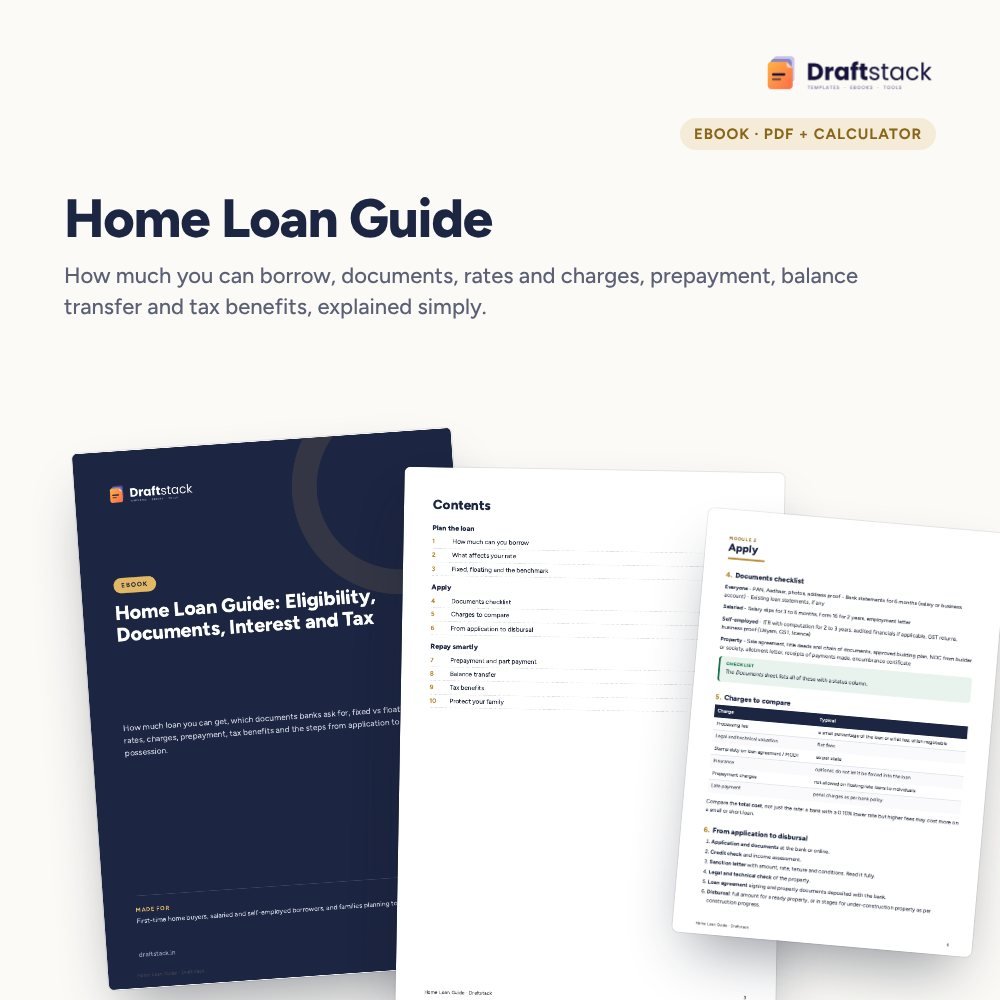 The template from this guideHome Loan Guide: Eligibility, Documents, Interest & Tax (Ebook)
₹149
 WhatsApp
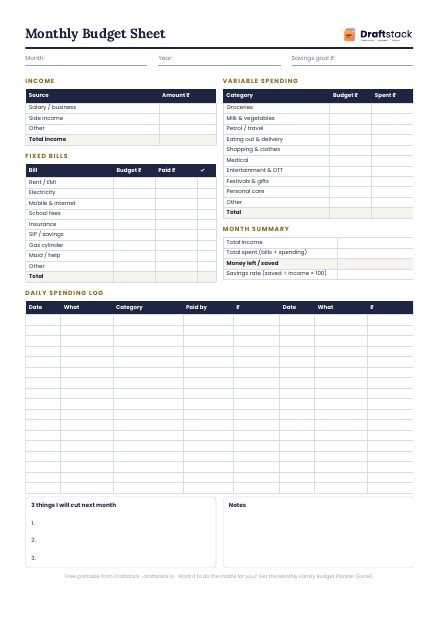
Free Monthly Budget Sheet
A printable one-page budget sheet: income, fixed bills, daily spending and savings for the month. Print it or fill it on your phone.
More guides
CIBIL Score: How to Check It Free and Improve It
What a good CIBIL score is, how to check it free, what pulls it down, the 2026 reporting changes, and a 90-day plan to improve your score and fix errors.
Income Tax Refund Status: How to Check and Why It's Delayed
How to check your income tax refund status on the e-filing portal, why refunds get stuck, how to fix bank account and PAN problems, and how to request a reissue.
AIS and Form 26AS: How to Check and Fix Mismatches
What AIS, TIS and Form 26AS (now Form 168) show, how to download them, how to give feedback on wrong entries and how to avoid a tax notice for mismatch.