How CA and Tax Offices Can Track Every Client Due Date
In a tax practice, the work is predictable but the volume is high. Every month brings GSTR-1, GSTR-3B, TDS deposits and PF; every quarter TDS returns and advance tax; every year ITRs, audits and ROC forms. The risk is not lack of knowledge, it is a missed date for one client.
Start with a client master
For each client, record:
- Name, type (individual, proprietor, firm, LLP, company) and PAN
- GST filing frequency: monthly, quarterly (QRMP) or none
- TDS, PF-ESI and audit applicability
- Staff member in charge
- Monthly retainer
This tells you which filings each client needs.
Create tasks every month
At the start of the month, create a task for every filing due: client, task, area, due date and staff. A task list makes the work visible. Tick it off with the filing date when done.
Usual due dates (confirm extensions)
- GSTR-1 monthly: 11th of the next month
- GSTR-3B monthly: 20th of the next month
- TDS deposit: 7th of the next month (30 April for March)
- PF and ESI: 15th of the next month
- Advance tax: 15 June, 15 September, 15 December, 15 March
- ITR without audit: 31 July
From 1 April 2026, the Income-tax Act, 2025 uses the term tax year. Dates are often extended, so confirm on the portals.
Waiting for client
Most delays are because the client has not sent data. Mark such tasks "Waiting for client" and send a reminder a week before the due date. Keep a record; it protects you if late fees arise.
Watch the board every morning
- Overdue tasks
- Tasks due in the next 7 days
- Open work per staff member
Track late filings
Count filings made after the due date. Each one may mean interest or a late fee for the client, and a conversation you would rather avoid.
Common mistakes
- Relying on WhatsApp chats as the task list
- One person knowing all passwords and dates
- Not recording when the client actually sent data
- Billing extra work months later
Bill regularly
Raise retainer bills on the 1st and follow up by the 10th. Extra work (notices, registrations) should be billed when done.
Tool
Our CA Client & Due-Date Tracker in Excel keeps clients, tasks, staff, due dates and fees on one work board.
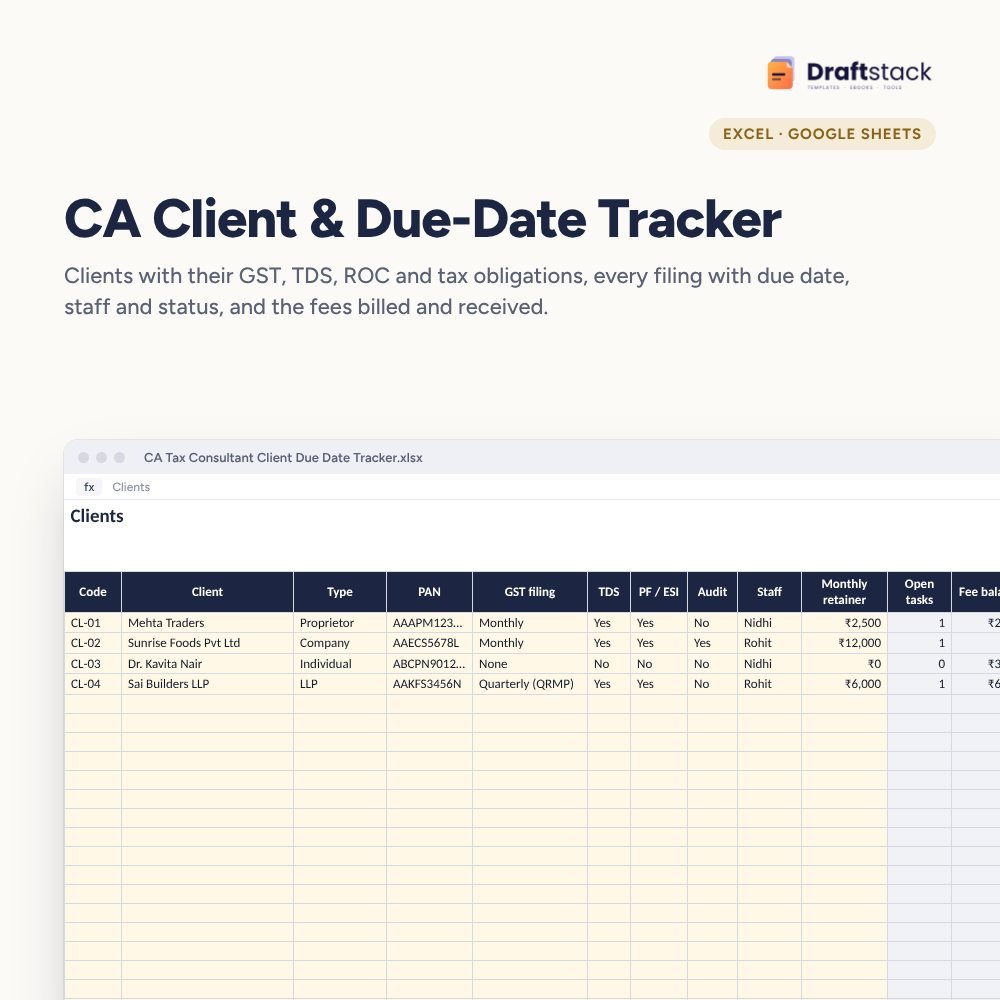 The template from this guideCA & Tax Consultant Client Tracker: GST, TDS, ITR, ROC Due Dates (Excel)
₹187
 WhatsApp
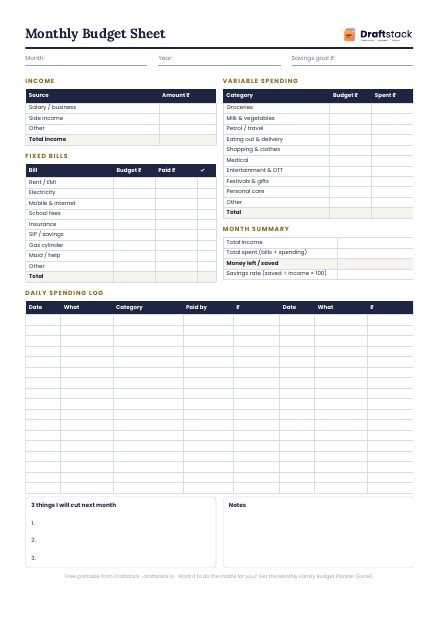
Free Monthly Budget Sheet
A printable one-page budget sheet: income, fixed bills, daily spending and savings for the month. Print it or fill it on your phone.
More guides
CIBIL Score: How to Check It Free and Improve It
What a good CIBIL score is, how to check it free, what pulls it down, the 2026 reporting changes, and a 90-day plan to improve your score and fix errors.
Income Tax Refund Status: How to Check and Why It's Delayed
How to check your income tax refund status on the e-filing portal, why refunds get stuck, how to fix bank account and PAN problems, and how to request a reissue.
AIS and Form 26AS: How to Check and Fix Mismatches
What AIS, TIS and Form 26AS (now Form 168) show, how to download them, how to give feedback on wrong entries and how to avoid a tax notice for mismatch.