How to Plan Headcount and Salary Budget for Next Year
A good manpower budget answers three questions: how many people will we have, what will they cost this year, and what will they cost per month by year end?
Step 1: Start from today's roles
List each role by department with current headcount and average CTC. Group similar people (18 CNC operators at about ₹3.6 lakh) instead of listing everyone, unless you want person-level detail.
Step 2: Add increments from the right month
If increments apply from April, the whole year carries the new salary. If they apply from July, only nine months do. Cost of current staff = headcount × CTC × (months at old salary + months at new salary × (1 + increment %)) ÷ 12.
Step 3: Phase new hires
New hires rarely join on day one. A hire expected in October costs six months this year. Add recruitment cost (job portals, consultants, onboarding) for each new hire.
Step 4: Add employer costs not inside CTC
Some companies quote CTC without group insurance, welfare costs or statutory items. Add them as a % on top so the budget isn't short.
Step 5: Allow for attrition
If 12% of people leave each year, you'll spend on replacement hiring even if headcount stays flat. Budget the recruitment cost for those replacements.
Step 6: Look at the year-end run-rate
Monthly cost at year end = year-end headcount × new CTC ÷ 12. This is next year's starting point. A budget that fits this year but doubles the run-rate needs a conversation.
A quick example
39 people today, 10 planned hires joining from July, increments averaging 8% from April:
- Current staff cost with increments: about ₹2.26 crore
- New hires for nine months: about ₹43 lakh including recruitment
- Year-end run-rate: about ₹23 lakh a month
Present it clearly
Show finance three numbers: total cost this year, cost of increments, cost of new hires. Then the run-rate. Decisions get easier when each lever has a price.
Check it during the year
Compare actual headcount and salary cost with the budget every month. If hiring is running behind, the budget will look healthy while work piles up; if it's running ahead, you'll see the overspend before year end. Update the plan once mid-year rather than letting it drift.
Our Manpower Cost & Headcount Budget Planner phases increments and new hires by month, adds employer costs and attrition, and shows cost by department and the year-end run-rate.
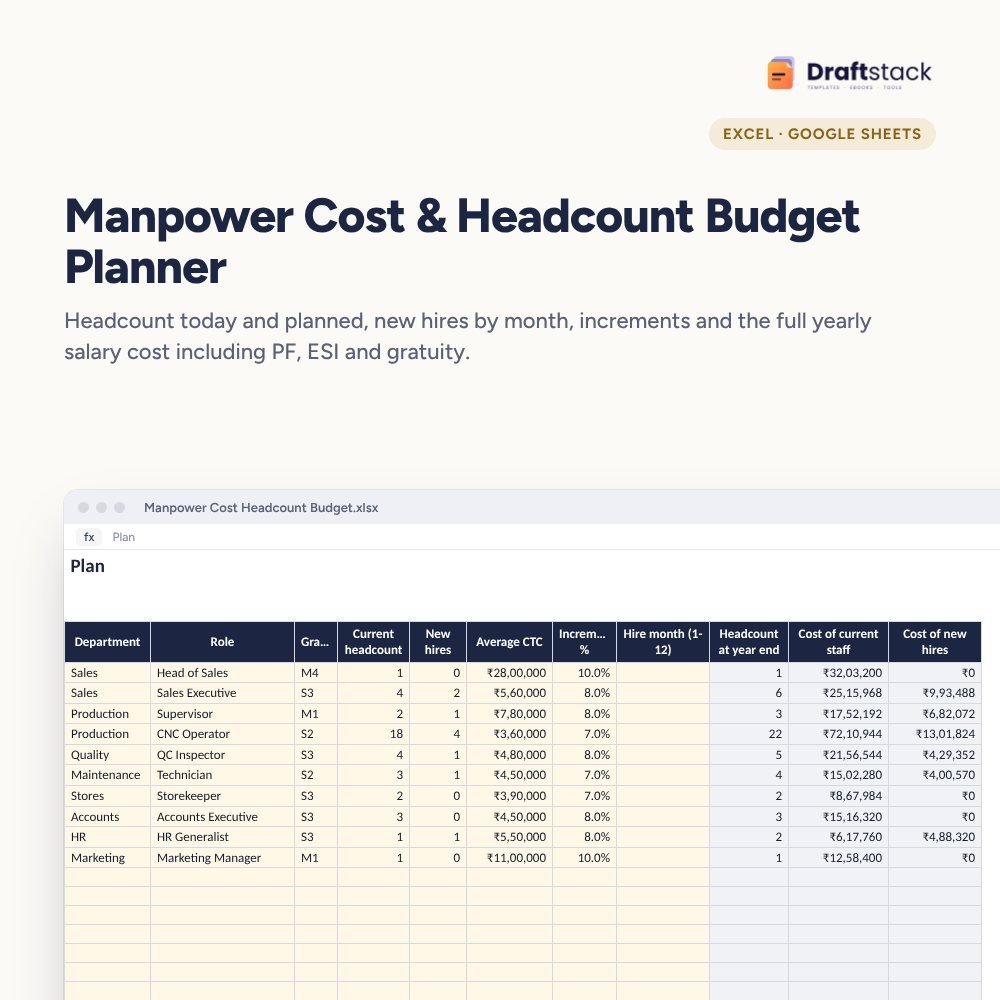 The template from this guideManpower Cost & Headcount Budget Planner (Excel)
₹449
 WhatsApp
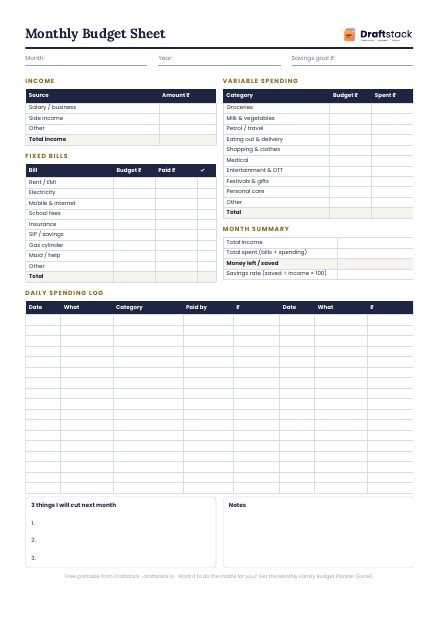
Free Monthly Budget Sheet
A printable one-page budget sheet: income, fixed bills, daily spending and savings for the month. Print it or fill it on your phone.
More guides
How to Collect Payments Faster from B2B Customers
Set credit limits and terms, invoice correctly, remind before the due date, log every promise, escalate politely and know when to hold orders.
How to Manage Visitor and Material Gate Passes
Visitor entry rules, returnable vs non-returnable gate passes, approvals, tracking overdue material, and a simple daily routine for security and stores.
How to Build a Risk Register for Your Company
Identify business risks, score likelihood and impact, read a heat map, plan actions, track residual risk and build basic business continuity.