How to Calculate Working Capital (and Free Up Cash)
A company can show a profit and still struggle to pay salaries. The gap is working capital: money tied up in customers who haven't paid and stock that hasn't sold.
Working capital in one line
Working capital (operating) = debtors + inventory − creditors.
If customers owe ₹65 lakh, stock is worth ₹38 lakh and you owe suppliers ₹34 lakh, your business needs ₹69 lakh of its own money (or bank funds) just to keep running.
Measure it in days
Days make the numbers comparable month to month:
- Debtor days = closing debtors ÷ monthly sales × 30
- Inventory days = closing inventory ÷ monthly cost of goods × 30
- Creditor days = closing creditors ÷ monthly purchases × 30
Example: monthly sales ₹50 lakh and debtors ₹70 lakh → 42 debtor days.
The cash conversion cycle
Cash cycle = debtor days + inventory days − creditor days.
With 42 debtor days, 45 inventory days and 40 creditor days, the cycle is 47 days: each rupee of sales ties up cash for about seven weeks. As sales grow, more cash gets stuck, which is why growing companies often feel cash-poor.
Five ways to free up cash
1. Collect faster: invoice the same day, follow up before due dates, offer small discounts for early payment where it's worth it.
2. Set credit limits: stop new orders to customers far past their terms.
3. Hold less stock: reorder levels, faster-moving items first, clear dead stock.
4. Use supplier terms fully: pay on the due date, not early (but within MSME limits).
5. Watch capex timing: big purchases in a tight month can be scheduled or financed.
Track cash monthly
Every month write down cash collected, cash paid (suppliers, salaries, expenses, taxes, EMIs, capex) and closing cash. Compare closing cash with a minimum you're comfortable with, for example one month of fixed costs plus statutory dues.
Turn it into a forecast
Fill the next three to six months with expected numbers. A forecast dip below your minimum is your signal to push collections, delay non-essential spends or arrange a working capital limit before it's urgent.
Our Cash Flow Statement & Working Capital Tracker rolls closing cash month to month, works out debtor, inventory and creditor days and the cash cycle, and flags months below your minimum.
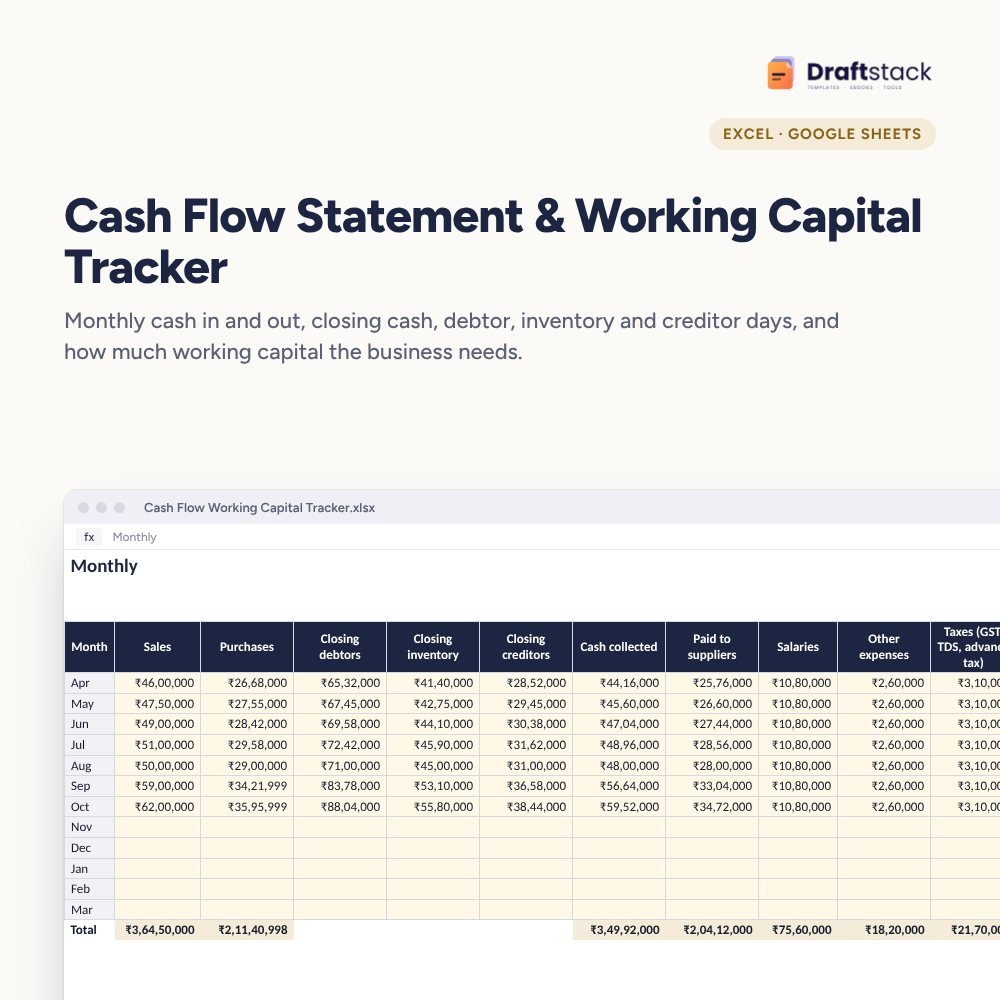 The template from this guideCash Flow Statement & Working Capital Tracker (Excel)
₹449
 WhatsApp
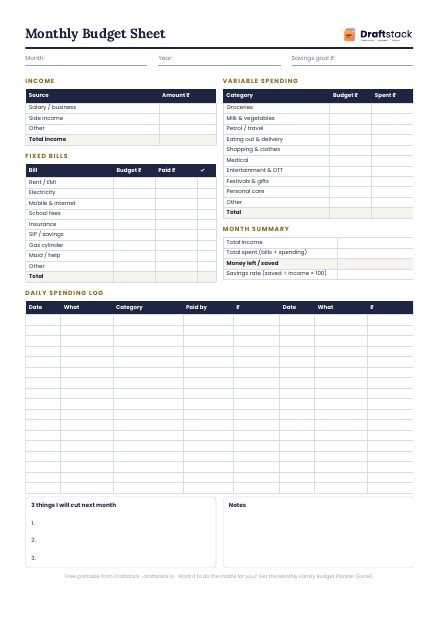
Free Monthly Budget Sheet
A printable one-page budget sheet: income, fixed bills, daily spending and savings for the month. Print it or fill it on your phone.
More guides
Depreciation as per Companies Act and Income-tax: A Simple Guide
Useful life, residual value, SLM vs WDV, depreciation by days used, income-tax blocks and the 180-day rule, with worked examples.
How to Calculate Earned Leave and Leave Encashment
Earned, casual and sick leave explained, accrual and carry-forward, how to count leave days around weekends and holidays, and how encashment is worked out.
How to Track Candidates Without an ATS
Set up positions and stages, move candidates quickly, measure time to fill and offer acceptance, and choose sources that actually bring joiners.