Chore Chart and Pocket Money: Teaching Kids Responsibility and Saving
Chores teach children that a home runs because everyone helps. Pocket money teaches them that money is limited and choices matter. Together, they build habits that last a lifetime.
Chores by age
- 5 to 7 years: make the bed, put toys away, water plants, help set the table
- 8 to 10 years: pack the school bag, fold clothes, clean the study table, feed a pet
- 11 to 14 years: help with groceries, simple cooking, keep their room tidy, help younger siblings
Start with three to five chores. Too many and the chart is forgotten in a week.
Make it visible
A chart on the fridge or a sheet you tick together every evening works better than reminders. Children love seeing points add up.
Linking chores to money
Give points for each chore and a rupee value for each point, for example ₹1 per point. Many families keep basic self-care (brushing, bathing) unpaid and give points for extra help around the house. Choose the rule that fits your values and keep it consistent.
Spend, save and share
Teach a simple split:
- Spend: small treats, comics, stationery
- Save: for a bigger goal
- Share: a small part to donate or buy a gift
Save for a goal
Help each child choose a goal they really want: a cricket bat, an art kit, a cycle. Write the cost and show progress every week. Waiting and watching the savings grow teaches patience better than any lecture.
Pay on a fixed day
Pay pocket money on the same day each week, like Sunday. Children learn to plan until the next payday.
Make it fair between siblings
Give each child chores that suit their age, and the same rate per point. Older children can earn more by doing harder tasks, which feels fair to everyone.
Praise effort
Praise the effort and consistency, not only the points. Missed chores are a chance to talk, not punish.
When children get older
Let them track their own points and money. Open a minor's savings account and show them the passbook or app.
Tracker
Our Kids' Chore Chart & Pocket Money Tracker in Excel links chores to points, points to pocket money and money to savings goals for each child.
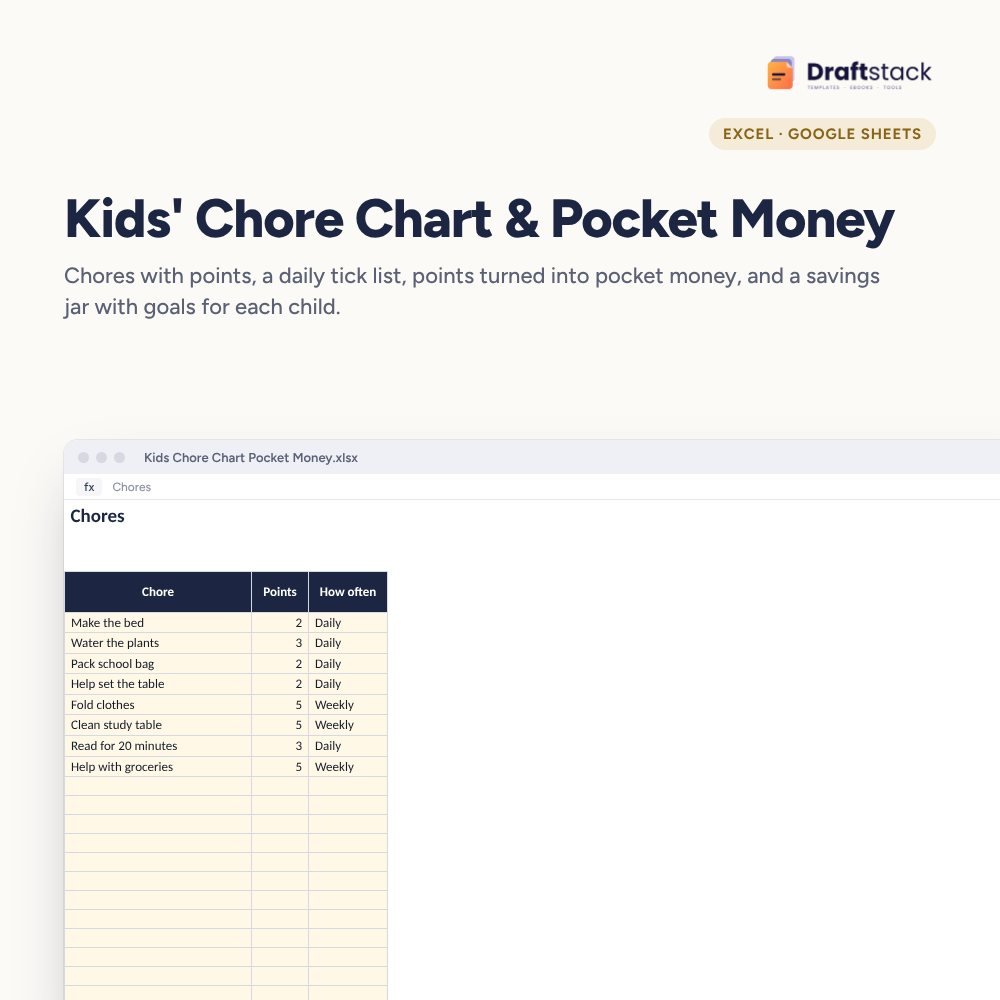 The template from this guideKids' Chore Chart & Pocket Money Tracker (Excel) with Savings Goals
₹37
 WhatsApp
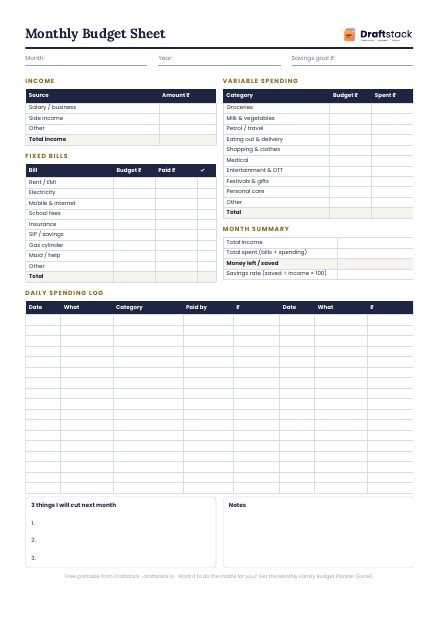
Free Monthly Budget Sheet
A printable one-page budget sheet: income, fixed bills, daily spending and savings for the month. Print it or fill it on your phone.
More guides
CIBIL Score: How to Check It Free and Improve It
What a good CIBIL score is, how to check it free, what pulls it down, the 2026 reporting changes, and a 90-day plan to improve your score and fix errors.
Income Tax Refund Status: How to Check and Why It's Delayed
How to check your income tax refund status on the e-filing portal, why refunds get stuck, how to fix bank account and PAN problems, and how to request a reissue.
AIS and Form 26AS: How to Check and Fix Mismatches
What AIS, TIS and Form 26AS (now Form 168) show, how to download them, how to give feedback on wrong entries and how to avoid a tax notice for mismatch.