Simple vs Compound Interest: How Byaj Is Calculated
Private loans in India are often quoted as "2 rupees per hundred per month" or "1.5 percent monthly". It sounds small, but it adds up quickly. Here is how to work it out and compare.
What a monthly rate means
"₹2 per ₹100 per month" means 2 percent a month. Over a year that is 24 percent of the principal under simple interest. A 1 percent monthly rate is 12 percent a year.
Simple interest
Interest is always worked out on the original principal.
Interest = principal × monthly rate × months
Example: ₹50,000 lent at 2% a month for 10 months.
Interest = 50,000 × 0.02 × 10 = ₹10,000. Total due = ₹60,000.
Compound interest
Interest is added to the principal at fixed intervals, and the next interest is worked out on the bigger amount. With yearly compounding on a 2% monthly rate (24% a year):
Amount = principal × (1 + yearly rate) ^ years
₹1,00,000 for 2 years at 24% a year, compounded yearly:
- After year 1: 1,00,000 × 1.24 = ₹1,24,000
- After year 2: 1,24,000 × 1.24 = ₹1,53,760
Interest = ₹53,760, compared with ₹48,000 under simple interest. The longer the loan runs, the bigger the gap.
Part payments
When the borrower pays part of the amount, agree in writing whether it goes first to interest or to principal. The usual practice is interest first. Keep a receipt for each payment.
Comparing with a bank loan
A personal loan from a bank at 12 to 18 percent a year is often cheaper than a private loan at 2 percent a month (24 percent a year). If you are the borrower, check both before agreeing.
Keep it written and legal
- Write every loan on a promissory note or loan agreement with the date, amount, rate, repayment terms and signatures of both people and a witness.
- States have money-lending laws that can require a licence for lending as a business and cap interest rates. Check your state's rules.
When a borrower stops paying
Send a polite written reminder with the amount due worked out to date. If that does not work, a lawyer's notice is usually the next step. Your written note, payment receipts and a clear record of interest make any discussion or legal step much easier. Without them, it is your word against theirs.
Track every loan
Our Money Lending & Interest Register works out simple or compound interest to any date, subtracts payments received and shows the balance for each borrower, with a summary of your biggest dues.
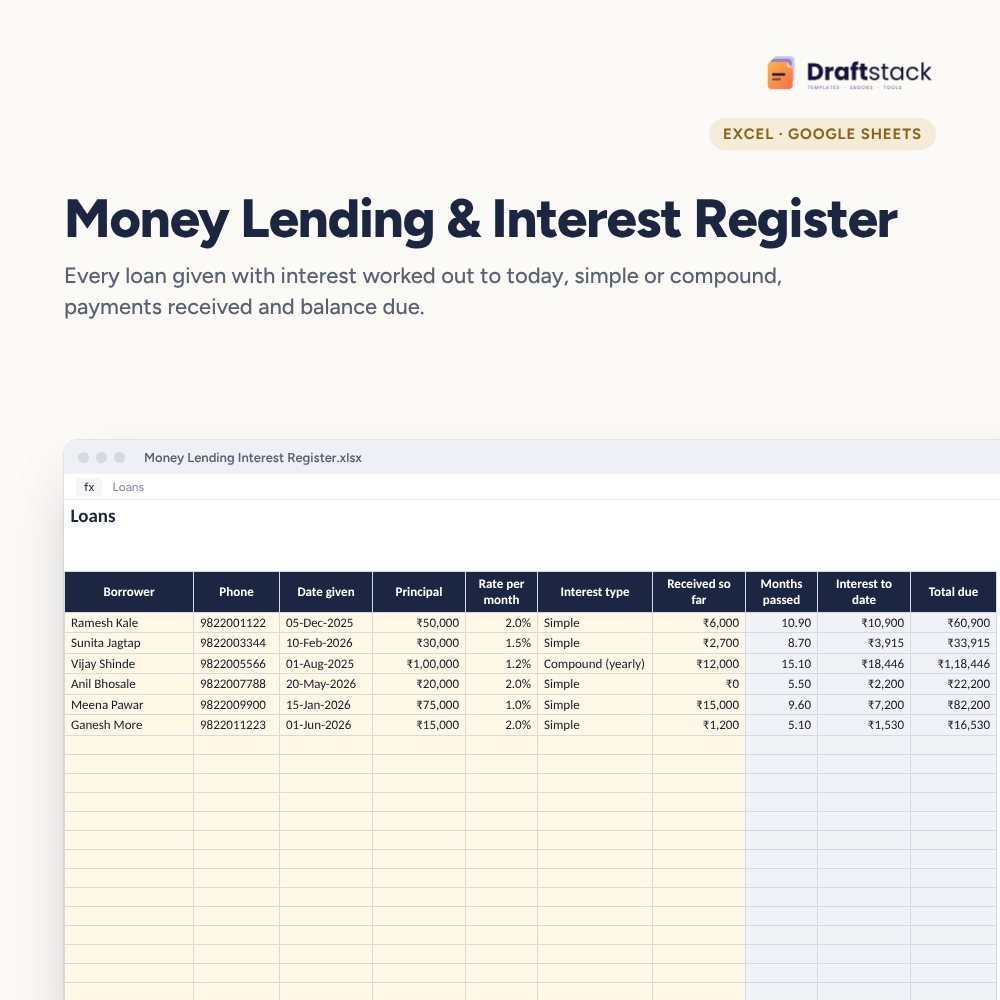 The template from this guideMoney Lending & Interest (Byaj) Register: Simple & Compound (Excel)
₹112
 WhatsApp
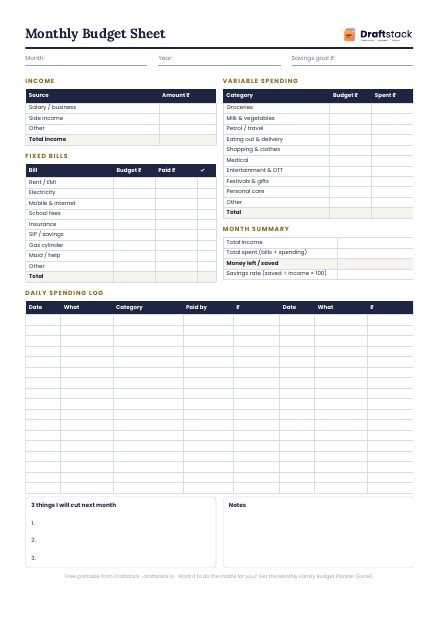
Free Monthly Budget Sheet
A printable one-page budget sheet: income, fixed bills, daily spending and savings for the month. Print it or fill it on your phone.
More guides
Prepay Home Loan or Invest? Simple Math with Examples
How much a home loan prepayment really saves, when investing the money may be better, and how to decide with a simple comparison.
How to Write a Business Plan for a Small Business in India
How to write a business plan for a shop or small business in India: the nine sections, estimating sales and costs, and finding your break-even month.
NIELIT CCC Exam: Syllabus, Pattern and How to Prepare
CCC (Course on Computer Concepts) is a basic computer literacy certificate run by NIELIT, a body under the Government of India. Many state and central governmen