PPF Interest Calculation: The 5th of the Month Rule Explained
The Public Provident Fund is one of the safest long-term savings in India: government-backed, tax-free and simple. But how and when you deposit changes what you earn.
How PPF interest is calculated
Interest is worked out every month on the lowest balance between the 5th and the last day of that month, and the total for the year is credited on 31 March. So:
- A deposit made on or before the 5th earns interest for that month.
- A deposit made on the 6th or later earns nothing for that month.
Why 5 April is the best day to deposit
If you deposit ₹1,50,000 by 5 April, the whole amount earns interest for 12 months. At 7.1%, that's about ₹10,650 in the first year. Deposit the same amount in March and it earns about ₹890 for that year. The difference repeats every year.
If you can't deposit a lump sum in April, a monthly deposit on or before the 5th is the next best option.
Limits and basics
- Minimum ₹500, maximum ₹1,50,000 per financial year (all deposits in your own account plus any you make for a minor child count together)
- Term: 15 full financial years after the year of opening
- Current rate: 7.1% (October to December 2026), reviewed every quarter
- Tax: deposits qualify for the deduction under the old regime; interest and maturity are tax-free
Withdrawing before maturity
From the 7th financial year, you can withdraw once a year up to 50% of the lower of:
1. the balance at the end of the 4th year before the withdrawal year, or
2. the balance at the end of the year just before.
Taking a loan
In years 3 to 6 you can borrow up to 25% of the balance at the end of the second year before the loan year. Interest on the loan is low (1% above the PPF rate), but the borrowed amount stops earning PPF interest until repaid.
After 15 years: extend
You can extend in blocks of 5 years, with or without fresh deposits, by applying within a year of maturity. Many people extend because the account keeps earning tax-free interest.
A quick example
₹1,50,000 every year by 5 April, at 7.1% throughout, grows to roughly ₹40.7 lakh after 15 years, of which about ₹18.2 lakh is interest. Extending for 10 more years with the same deposits takes it past ₹1 crore.
Our PPF Calculator & Yearly Planner works out interest by deposit month, uses the right rate for each year and shows withdrawal and loan limits for all 25 years.
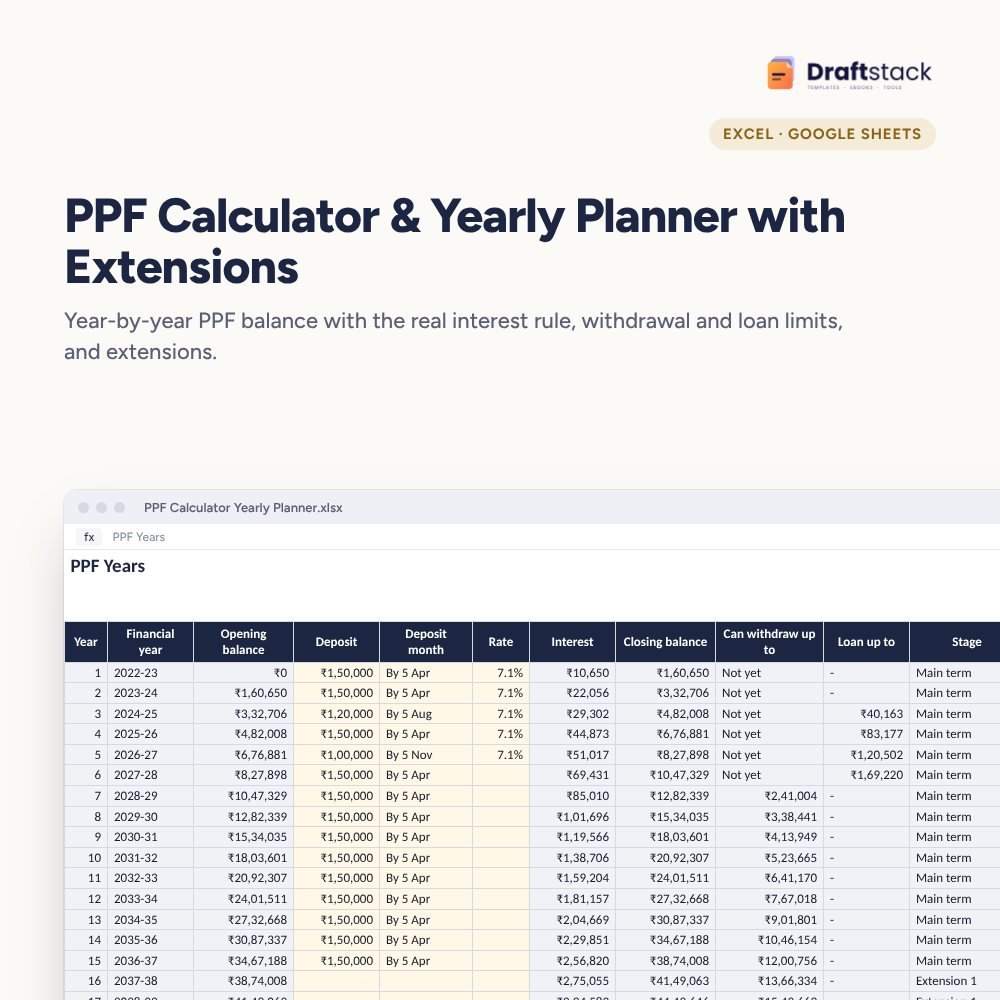 The template from this guidePPF Calculator & Yearly Planner with Extensions (Excel)
₹149
 WhatsApp
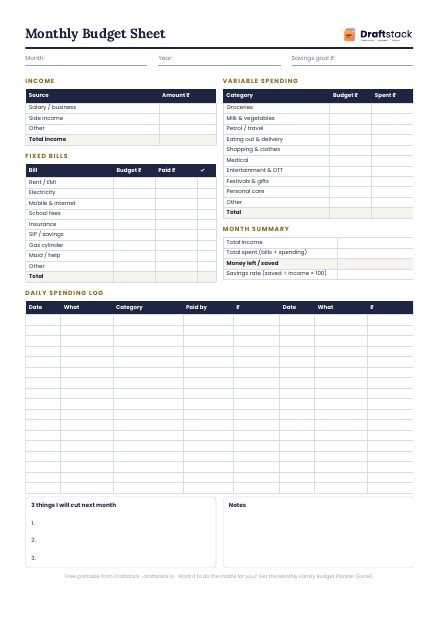
Free Monthly Budget Sheet
A printable one-page budget sheet: income, fixed bills, daily spending and savings for the month. Print it or fill it on your phone.
More guides
What Is XIRR in Mutual Funds (and How to Calculate It in Excel)
Why absolute return misleads for SIPs, how XIRR works, a worked example, and how to calculate it yourself in Excel or Google Sheets.
FD Maturity Amount and TDS on FD Interest, Explained
How banks work out FD and RD maturity values, when TDS is cut on interest, how Form 15G and 15H help, and a simple way to never miss a renewal.
How to Keep a Record of Your Family's Gold Jewellery
What to note for each piece, how to value 22K and 18K gold from today's rate, why HUID and bills matter, and how jewellery schemes really work.