How to Calculate Your Electricity Bill from Units
Your electricity bill looks complicated, but it is built from four or five simple parts. Once you know them you can check any bill in five minutes.
Step 1: Work out units
Units used = current reading − previous reading. Both readings are printed on your bill; you can also read the meter yourself on the same date each month. One unit is one kilowatt-hour: a 1,000 watt appliance running for one hour.
Step 2: Apply the slab rates
Most state boards charge home connections in slabs. In a typical telescopic tariff, each slab only applies to the units inside it. Example with 350 units and these rates: 0 to 100 at ₹3.50, 101 to 300 at ₹6.20, above 300 at ₹8.40.
- First 100 units: 100 × 3.50 = ₹350
- Next 200 units: 200 × 6.20 = ₹1,240
- Last 50 units: 50 × 8.40 = ₹420
- Energy charge: ₹2,010
Some boards charge the whole bill at the higher rate once you cross a limit. Your board's tariff order or the back of your bill says which method it uses.
Step 3: Add the other charges
- Fixed charge, usually based on your sanctioned load in kW
- Fuel or power purchase adjustment per unit (FPPA, FAC or a similar name)
- Electricity duty, a percentage of the energy charge
- Meter rent, if you use the board's meter
Add them up and you get the bill. If yours is far off, look for arrears, an estimated reading (often marked "RNA" or "estimated") or a mid-year tariff change.
Step 4: Find what uses the most
Units per month for an appliance = watts × hours per day × days ÷ 1,000. A 1.5 ton split AC drawing 1,500 watts for 6 hours a day uses about 270 units a month; at ₹8 a unit that is over ₹2,100. A ceiling fan at 75 watts for 12 hours uses 27 units. That is why summer bills jump.
Simple ways to bring the bill down
1. Set the AC to 24 to 26°C and use a fan with it. Each degree lower adds power use.
2. Use the geyser timer. Twenty minutes of heating is usually enough for a family's morning baths.
3. Replace old tube lights and bulbs with LEDs; they use a fraction of the power.
4. Defrost and clean the fridge coils; keep it away from the wall.
5. Check the bill every month. A wrong reading caught early is easy to correct.
Our Electricity Bill Calculator & Unit Tracker does the slab maths for any state's tariff, compares it with the bill you paid and shows the cost of each appliance. It works in Excel and Google Sheets.
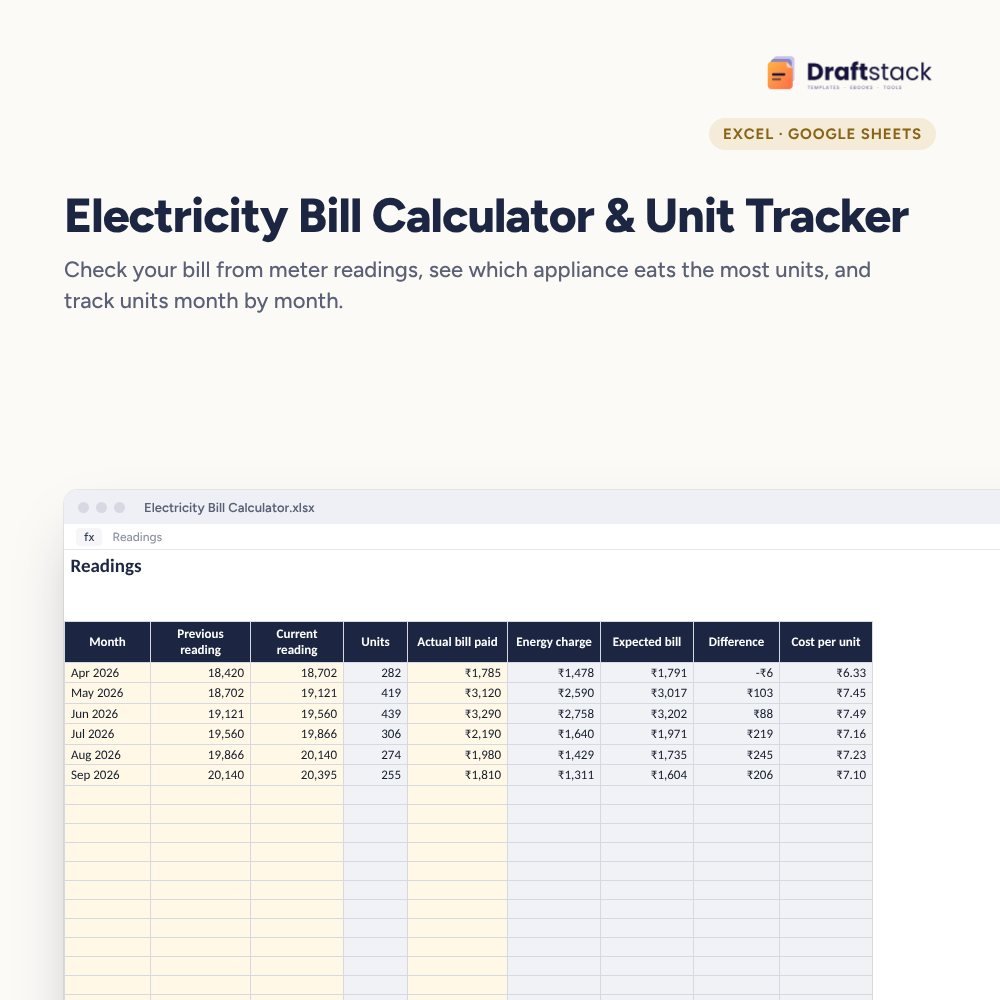 The template from this guideElectricity Bill Calculator & Unit Tracker (Excel)
₹99
 WhatsApp
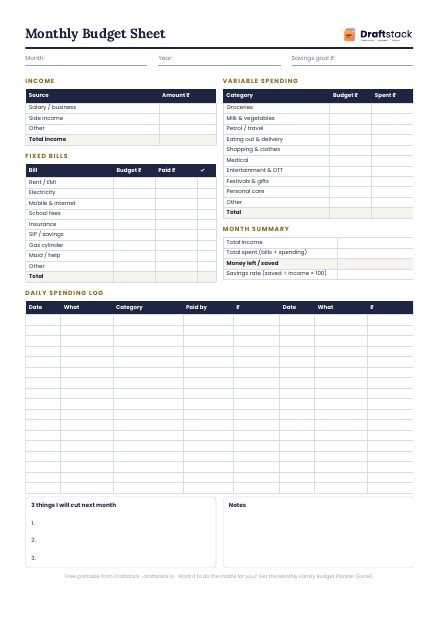
Free Monthly Budget Sheet
A printable one-page budget sheet: income, fixed bills, daily spending and savings for the month. Print it or fill it on your phone.
More guides
Monthly Ration List for a Family of 4 (with Budget)
How much atta, rice, dal and oil a family of four really uses in a month, what it costs in 2026, and how to cut the bill without eating less.
How to Track Daily Expenses at Home (Without an App)
A simple system Indian families actually stick to: one line per spend, 18 categories, a monthly budget and a 10-minute review on the 1st.
New GST Rates (GST 2.0): What Changed from 22 September 2025
The new GST slabs in plain words: 5%, 18% and 40%, the special rates, and what small businesses should update on their bills.